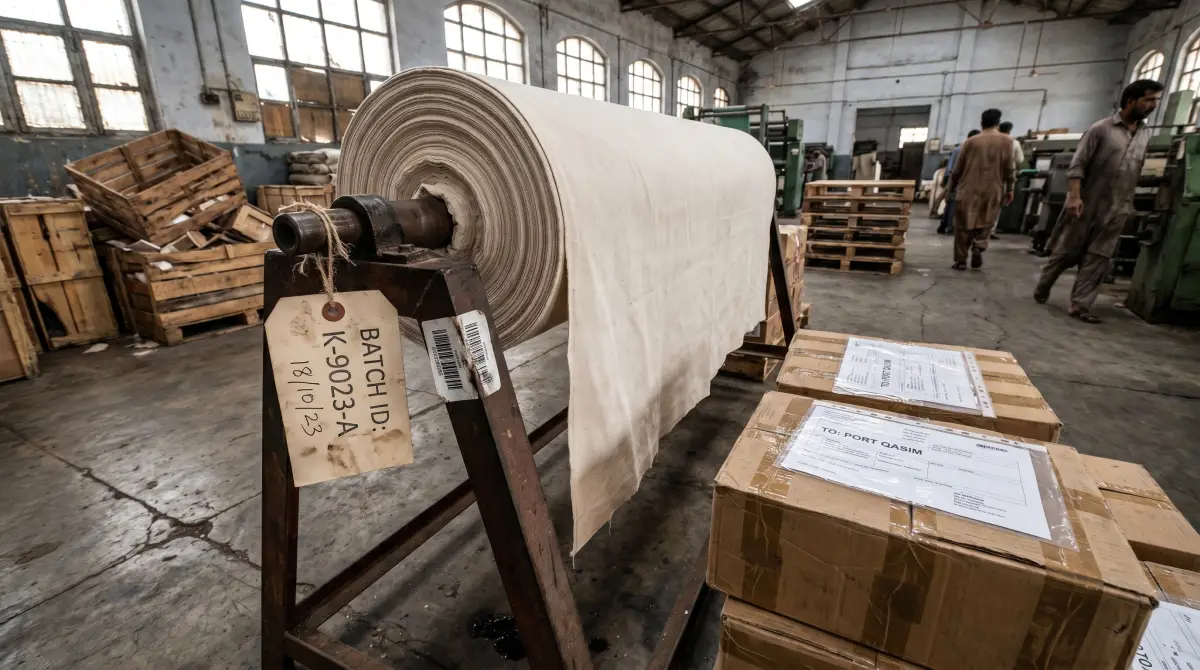
Every consignment has a batch ID.
The batch ID printed inside each canvas bag links four things: the fabric supplier batch, the sewing-line operator, the QC inspector, and the dispatch date. Any field quality query traces back to the build record in under a minute.
A single ID, four traceable hops.
└── Brand · Year · SKU · Week-of-year · Sewing-line · QC-inspector code
Fabric supplier batch. Each fabric arrival has its own batch number from the supplier. Mapped 1:1 to the BNC batch ID at intake. Cutting-floor record. Cutting-floor supervisor signs off on the dimensional + edge-finish QC for every 50-unit block in the run. Sewing-line operator code. Every operator on the line has a unique two-digit code. Each batch sheet records the operator(s) who ran each seam type. QC inspector code. Final QC inspector signs off on the consignment release. Inspector code printed alongside the batch ID inside each canvas bag inventory pocket. Dispatch date. Container-load date written into the batch master. Cross-references to the bill of lading + forwarding agent's pickup record.
When a tent fails, the buyer wants to know which batch.
If a relief-cluster procurement officer reports a seam failure on a deployed family tent, the batch ID inside the inventory pocket lets us pull the build record in minutes. We know: which fabric supplier, which dye lot, which sewing operator, which QC inspector, which dispatch container.
That trace is the difference between a vague "let us investigate" reply (sourcing-house behaviour) and a same-day root-cause analysis (single-entity manufacturer behaviour). The same architecture is what makes ISO 9001 audit feasible.